2026-08-15
Gap: Coastal river mouth carved too wide
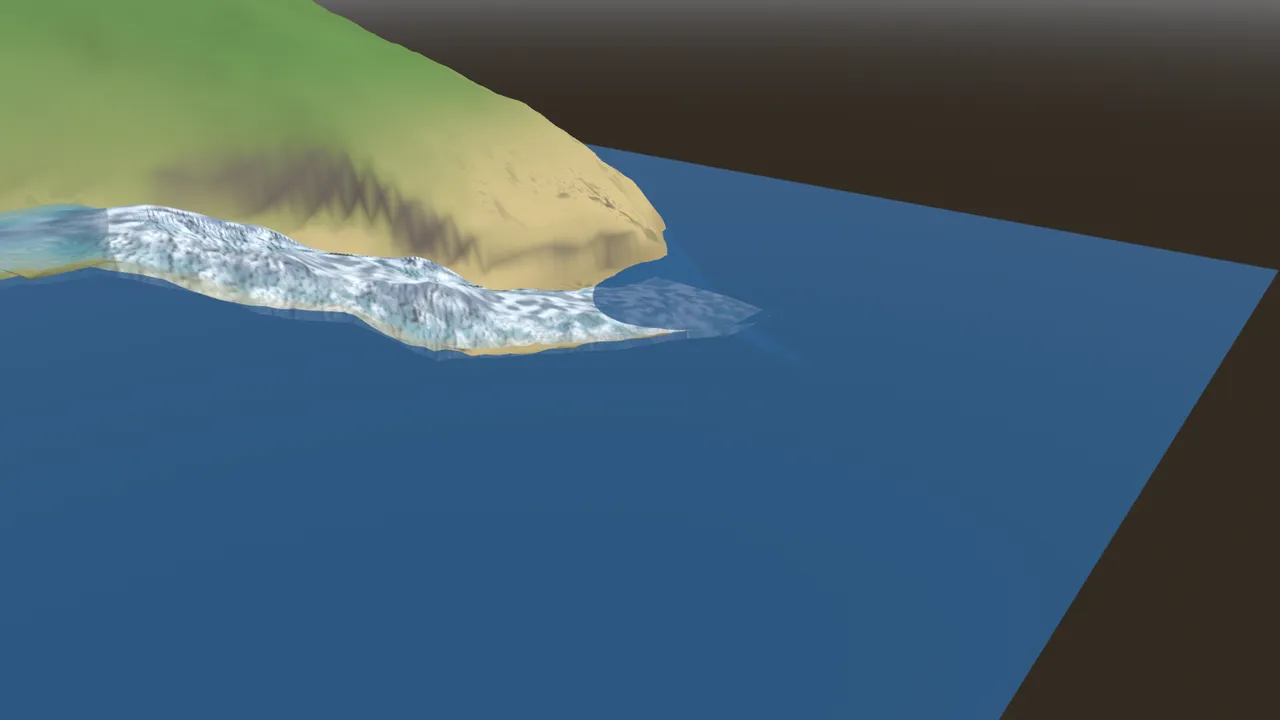
One river mouth failed the build's own validation: 72 cells were cut 15 to 17 metres into a coastal bluff, fifty metres from the water's edge, because the carve reached too far outward on both sides.
Gap: Coastal river mouth carved too wide
The failed cells were a specific cut type: depths of 15.6 to 17.3 metres exceeded that type's maximum allowed depth of 15.35 metres. Near the mouth, the shoulder zone smoothed ground toward the water across roughly 115 metres on each side of a 57-metre-wide river.
The first fix tried, a depth limit never cutting a shoulder cell below a fixed allowance, broke the river it was meant to fix: one course's water-quality check dropped from 7 of 9 passing measures to 3 of 9, since standing ground was left where the water needed conforming ground, and the surface buckled.
A second attempt carved two extra cells past the channel's edge, fixing the first river but not the second: a later smoothing pass moves the water level after the initial carve, so cuts at the original level sat below it as an unsmoothed dip.
The fix that held combines both ideas: past a short buffer, the carve cannot cut steeper than a 45-degree rise from the channel bed. Near the water the floor stays close to the bed, so shallow banks stay smooth while a seventeen-metre bluff keeps its face mostly intact behind an equally tall wall. Disabling the rule confirms it matters: 2,302 cells fail the same check without it.
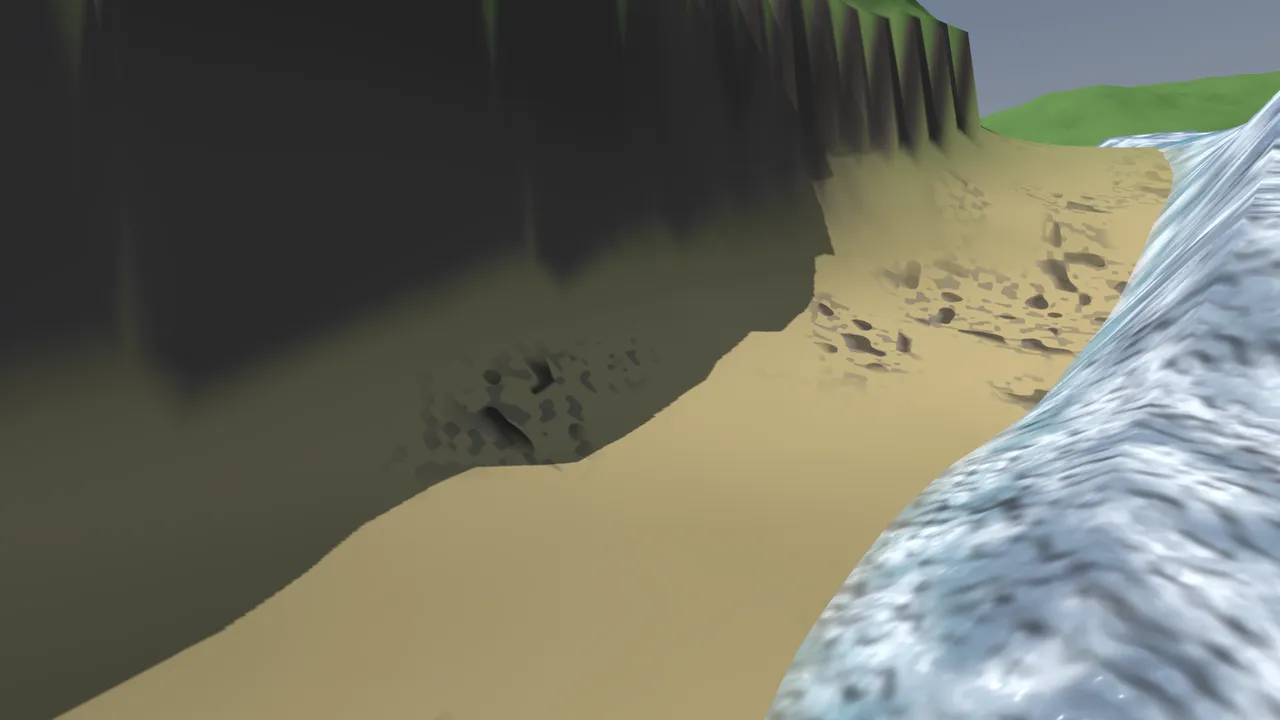
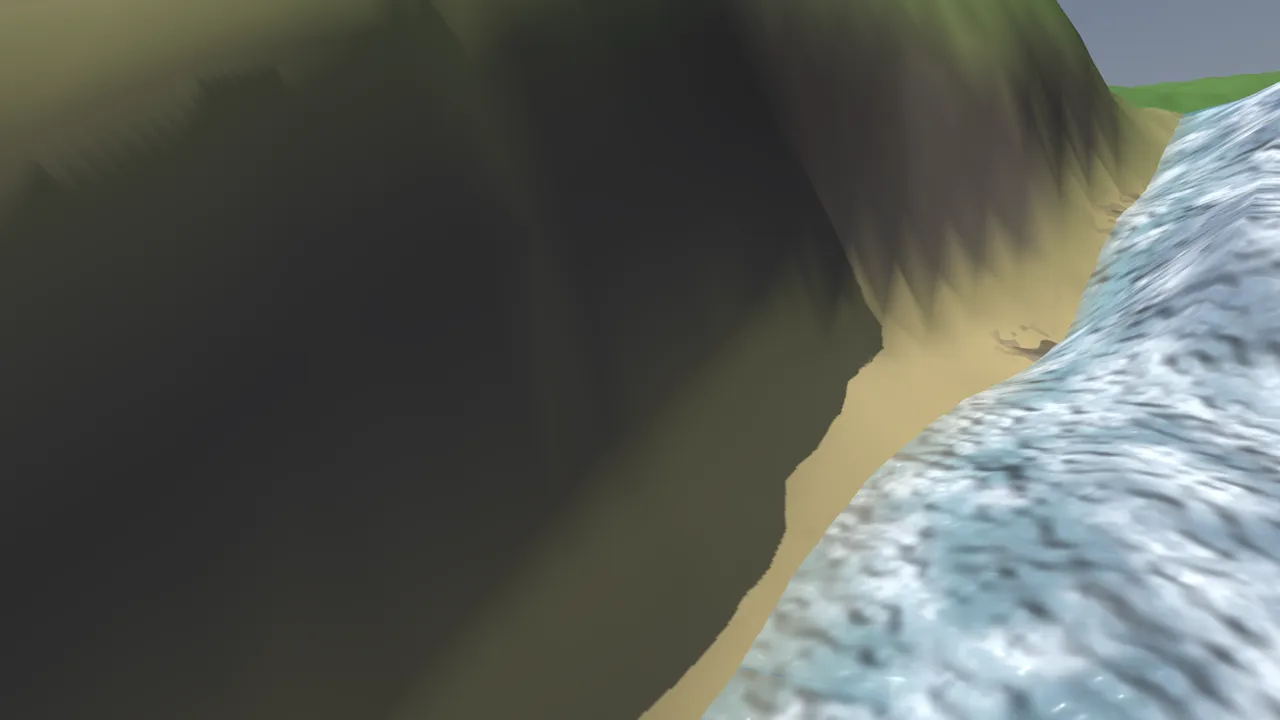
The first river now builds cleanly: failing cells all clear, its water-quality check passes fully, and its excavated footprint is down 45 percent. The second clears its depth violations but falls one measure short, since the smoothing pass currently runs only once; a test-only setting that lets it repeat restores both rivers to their original quality scores within four repetitions. Whether the shipped build should allow that repeat is an open decision.